


Mountain biking in Cusco means shuttling up to ridges between 3,800 and 5,000 m and riding down 1,000 m or more on Inca stone trails, shepherd singletrack and Andean forest. There are routes for every level, from easy dirt roads to Maras and Moray to expert enduro above the Sacred Valley. Ride in the dry season (May to October) and spend one or two days in Cusco to acclimatize before your first big day.
The first time you drop in above the city, Cusco’s red-tiled roofs sit far below your bars. A few turns later the trail narrows to a line no wider than your tires, the stone steps start, and you stop sightseeing. That mix of heritage, altitude and long descents is what makes this corner of the Andes special, and it is why we started guiding here.
Key Takeaways
- Cusco sits at 3,400 m, and most rides start between 3,800 and 5,000 m a.s.l., so you get big descents with very little climbing.
- Terrain goes from beginner-friendly dirt roads (Cusco By Bike, Maras Moray Biking) to expert enduro (Cusco Epic Trails, Patacancha Enduro).
- The dry season, May to October, has the best trail conditions.
- Full-day guided tours start at $120 per rider for groups of three or more, with a full-suspension bike and protective gear included.
Last updated: October 2026 · Written by the Kinti Biking guide team in Cusco
Is Cusco Good for Mountain Biking?
Yes. Cusco is one of the best places for mountain biking in Peru, and one of the most varied in South America. The city sits in a high valley at 3,400 m (11,155 ft), ringed by ridges above 4,000 m. Over centuries, the Incas and the shepherds who still live in these mountains built a dense network of stone roads and footpaths that link those ridges with the valleys below. Today, many of those paths are rideable singletrack.
Three things make Cusco stand out:
- Vertical without lifts. A van shuttles you to the top and you ride down. On routes such as Inca Avalanche DH you start at 4,316 m and finish at 2,792 m in Ollantaytambo, more than 1,500 m of descent in a single day.
- Variety in a small area. Within two hours of the city you can ride technical rock gardens, fast flowy forest, open high-Andean freeride and gentle dirt roads.
- Culture on the trail. You ride past Inca terraces, salt pans that have been worked for centuries, and villages where Quechua is still the everyday language.
Where to Ride: Cusco’s Main Mountain Biking Areas
Around Cusco city
The hills that surround the city hold the trails local riders use every week. Short, punchy lines near Huayllarcocha and Sacsayhuamán mix ramps, drops and rock gardens, and you can finish with an urban descent through the narrow streets of San Blas to the main square. Higher up, Cerro Picol (4,200 m) and Huaccoto are home to some of the most technical Inca-trail lines in the region.
Rides here: Cusco MTB Trails, Cusco Epic Trails, Cusco Inca Ride.

The Sacred Valley
The Sacred Valley of the Incas, about an hour from Cusco, is where most full-day mountain bike tours go. Trails drop from the high plateau around Chinchero (3,762 m) and from the passes above Lamay, Patacancha and Ollantaytambo down to the Urubamba River at around 2,800 m. Expect long descents, flowy sections, Inca stairs and some of the best views in Peru.
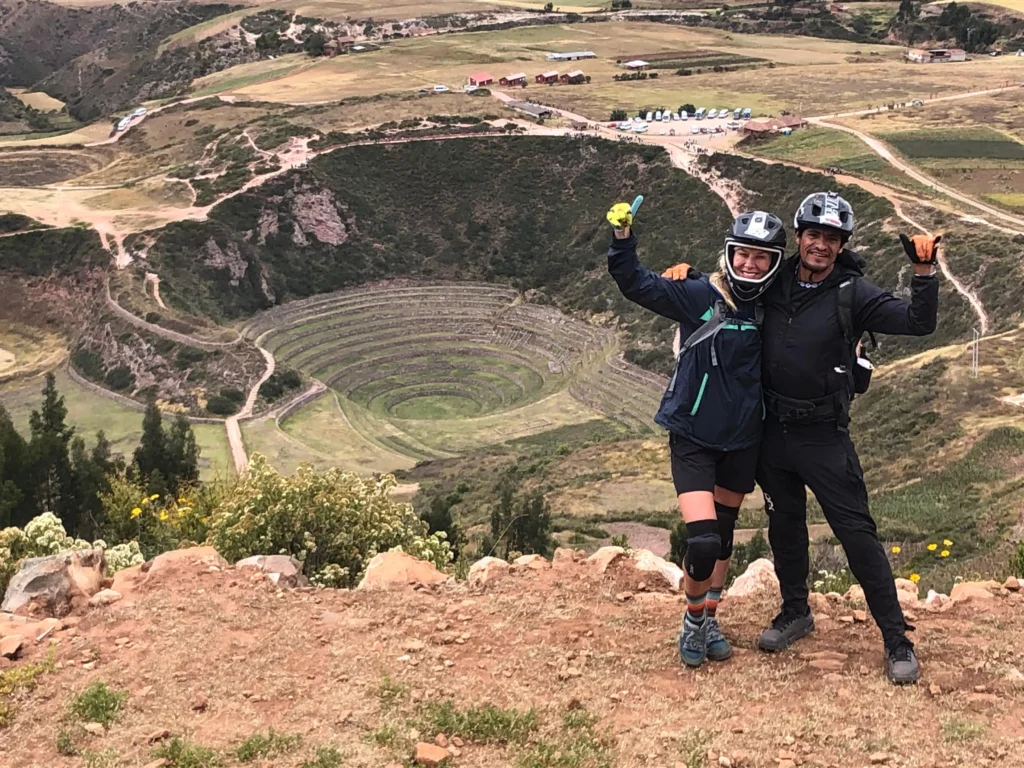
Highlights include the Maras salt mines and the circular Inca terraces of Moray, the flow trails of Lamay, and enduro lines such as La Maxima above Urubamba.
Rides here: Maras Moray Biking, Salt Mines Ride, Lamay Flowy Trails, The Other Side Trails, The Sacred Valley Ride.
The high Andes: Rainbow Mountain and Ausangate
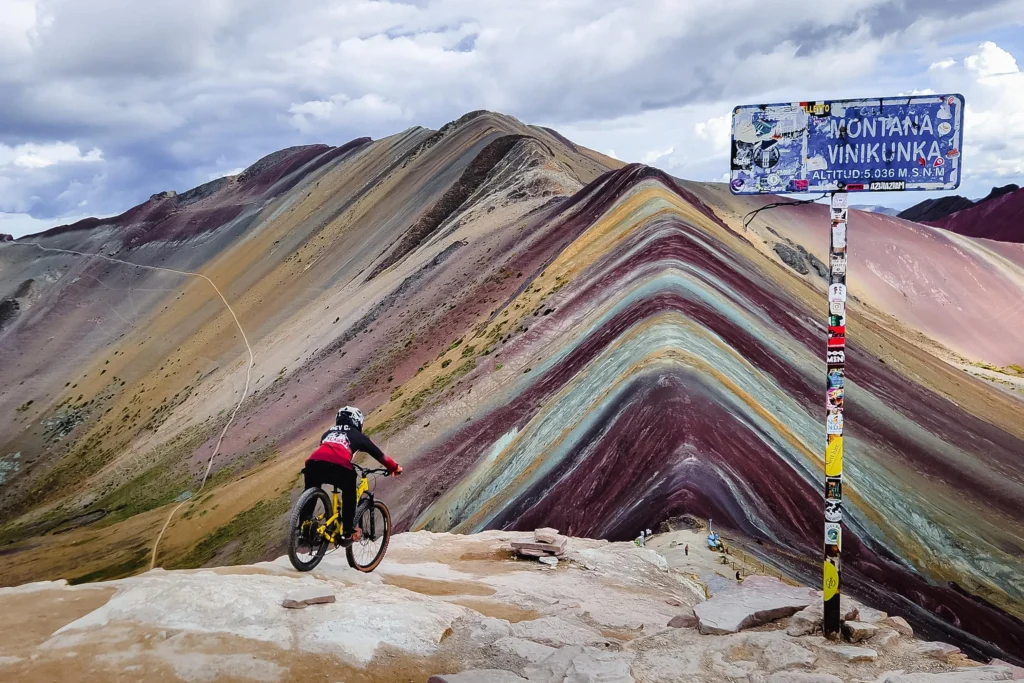
South-east of Cusco, the Vilcanota range offers high-altitude riding on a different scale. Rainbow Mountain (Vinicunca) sits at around 5,000 m and you can descend from it through the Red Valley to the village of Pitumarca (3,570 m). Further on, the trails around Ausangate cross passes of up to 5,200 m and pass glacial lagoons on the way to the Pacchanta hot springs. These are rides for experienced, well-acclimatized riders.
Rides here: Rainbow Mountain Biking, Mountain of Colors + 7 Ausangate Lagoons.
Towards Machu Picchu and the jungle
From the Sacred Valley, routes continue over high passes and down into the cloud forest and jungle around Santa Teresa and Quillabamba, which sits at around 1,000 m. This is the terrain of our multi-day trips, which can end at Machu Picchu.
Cusco Mountain Bike Trails by Level
Every route below is a guided full-day or half-day tour from Cusco. Altitudes are the highest and lowest points of the ride.
| Ride | Level | Max / min altitude | Distance | From (per rider, 3+) |
|---|---|---|---|---|
| Cusco By Bike | Easy | 3,871 / 3,350 m | 7.5 km | $120 |
| Cusco Inca Ride | Easy | 3,800 / 3,400 m | 18 km | $120 |
| Maras Moray Biking | Easy | 3,745 / 2,840 m | 38.6 km | $200 |
| The Sacred Valley Ride | Easy | 3,740 / 2,855 m | 21 km | $200 |
| Cusco MTB Trails | Medium | 3,775 / 3,400 m | 18 km | $120 |
| Lamay Flowy Trails | Medium | 4,400 / 2,941 m | 24 km | $200 |
| Salt Mines Ride | Medium | 3,800 / 2,800 m | 24 km | $200 |
| The Other Side Trails | Medium | 4,000 / 2,800 m | 26 km | $200 |
| Rainbow Mountain Biking | Medium | 5,000 / 3,570 m | Full day | $350 |
| Cusco Epic Trails | Hard | 4,200 / 3,300 m | 20 km | $140 |
| La Maxima DH | Hard | 4,490 / 2,855 m | 18 km | $190 |
| Inca Avalanche DH | Extreme | 4,316 / 2,792 m | 36.4 km | $190 |
| Patacancha Enduro | Extreme | 4,400 / 2,792 m | 18 km | $200 |
Easy: new to mountain biking
If you have never ridden off-road, start with Cusco By Bike, a half-day ride through the city’s viewpoints and neighborhoods, or Maras Moray Biking, which follows rural dirt roads past Lake Huaypo to the Maras salt mines. Both are suitable for families and confident beginners.
Medium: comfortable on singletrack
If you ride trails at home, Lamay Flowy Trails and Cusco MTB Trails are the best introduction to Andean singletrack: fast, flowy and with a few technical sections to keep you honest.
Hard and extreme: enduro and downhill riders
For advanced riders, Cusco offers some of the most demanding terrain in Peru. Cusco Epic Trails links three technical descents from 4,200 m, with long rock gardens and Inca steps. Patacancha Enduro is considered one of the toughest enduro routes in the country, because of its altitude and technical climbs.
Level check: If steep, loose rock gardens make you nervous, ride a medium route first. Tell our guides how you ride and they will recommend the right line.
Enduro and Downhill in Cusco
Cusco has no lift-served bike park, but it does not need one. Shuttle-assisted enduro and downhill are the heart of the local scene, and the terrain rewards a capable trail or enduro bike.
- Downhill in Cusco: Inca Avalanche DH follows the line of Peru’s best-known downhill race, starting at the Abra Málaga pass (4,316 m) near the Verónica glacier and finishing in Ollantaytambo. La Maxima DH begins with a rocky ridge and turns into a fast, aggressive descent towards Urubamba.
- Enduro in Cusco: Cusco Epic Trails and Patacancha Enduro combine short climbs and hike-a-bike sections with long technical descents.
- Urban downhill: several rides end with a descent through Cusco’s or Ollantaytambo’s cobbled streets and stairs.
See all our enduro and downhill tours.
Riding at Altitude: How to Prepare
Altitude is the biggest difference between riding here and riding at home. Cusco is at 3,400 m, and most routes start higher. Above 2,500 m, many people feel symptoms of altitude sickness, known locally as soroche: headache, nausea, dizziness and poor sleep. The NHS guide to altitude sickness is a good overview.
What works for riders:
- Acclimatize first. Spend at least one to two days in Cusco or the Sacred Valley before a full-day ride.
- Start low. Choose an easy or medium ride for your first day, then move on to routes that start above 4,000 m.
- Pace the climbs. Descents feel normal, but short climbs and hike-a-bike sections feel much harder than at sea level. Your guide will set a steady pace.
- Hydrate and protect yourself from the sun. The air is dry and UV levels are high: drink often and use sunscreen and lip balm.
- Listen to your body. If symptoms get worse, stop and tell your guide. Descending is the most effective fix.
Best Time for Mountain Biking in Cusco
| Months | Season | Trail conditions |
|---|---|---|
| May to October | Dry season | Best conditions: dry, fast trails and clear views. Cold mornings at altitude. |
| November and April | Shoulder months | Mixed weather, greener landscapes and fewer riders. |
| December to March | Rainy season | Frequent afternoon rain, muddy and slippery sections. Many routes are still rideable. |
June to August is the busiest period in Cusco, so book popular dates in advance.
Bike, Gear and What to Pack
All our full-day rides include a full-suspension mountain bike, a helmet, knee pads and gloves, private transport, professional MTB guides, lunch, water and snacks. Many riders leave their own bike at home and ride ours.
Bring:
- Riding clothes and warm layers for the high starts
- A waterproof or windproof jacket
- Sunglasses, sunscreen and lip balm
- A small backpack or hip pack
- Your passport or ID
- Travel insurance that covers mountain biking (it is not included in tours)
How Much Does a Mountain Bike Tour in Cusco Cost?
Prices are per person and go down as your group grows.
| Type of tour | Price range (per rider) |
|---|---|
| Half-day and short rides (Cusco By Bike, Cusco Inca Ride, Cusco MTB Trails) | From $120 (3+ riders) to $180 (1 rider) |
| Full-day Sacred Valley rides | From $200 (3+ riders) to $260 (1 rider) |
| Enduro and downhill days (Epic Trails, La Maxima, Inca Avalanche) | From $140 to $260 |
| Rainbow Mountain Biking | From $350 |
| Multi-day trips (6 to 11 days) | From $1,400 |
All full-day prices include the bike, protective gear, transport, guides and lunch. You can book online by paying a deposit.
Multi-Day Mountain Bike Trips in Peru
If you have a week or more, a multi-day trip lets you link Cusco’s best trails without planning the logistics yourself:
- Cusco MTB Explorer: 6 days and about 140 km around Cusco and the Sacred Valley.
- Sacred Valley MTB Rides: 9 days of Inca trails, canyons and salt mines, ending at Machu Picchu.
- Chasing the Last Days of the Incas: 9 days from the high Andes to the Quillabamba jungle.
- Machupicchu MTB Adventure: 11 days, our most complete trip.
Browse all multi-day mountain bike trips or plan a custom ride.
Riding Inca Trails Responsibly
Many of the trails around Cusco are part of the Inca road network and are still used by local communities. Help keep them open to riders:
- Stay on the trail and never ride on terraces or walls of archaeological sites.
- Give way to people walking and to herds of llamas, alpacas and sheep.
- Slow down when you pass through villages.
- Take all your rubbish with you and leave no trace.
Frequently Asked Questions
Do I need to bring my own mountain bike to Cusco?
No. Our full-day tours include a full-suspension mountain bike, helmet, knee pads and gloves. Bring your own riding clothes, layers and a windproof jacket.
Is mountain biking in Cusco suitable for beginners?
Yes, on the right route. Cusco By Bike, Cusco Inca Ride and Maras Moray Biking follow dirt roads and easy trails. Technical routes such as Cusco Epic Trails and Patacancha Enduro are only for advanced riders.
How many days should I acclimatize before riding?
At least one to two days in Cusco or the Sacred Valley. Start with an easier, lower ride before routes that begin above 4,000 m.
What is the best mountain bike ride near Cusco?
It depends on your level. For flow, Lamay Flowy Trails. For technical enduro, Cusco Epic Trails. For culture with easy riding, Maras Moray Biking. For a unique high-altitude day, Rainbow Mountain Biking.
Is travel insurance included?
No. Get travel insurance that explicitly covers mountain biking before your trip.
Ready to Ride Cusco?
Mountain biking in Cusco combines big descents, high-altitude scenery and centuries of history on the same trail. Pick a route that matches your level, give yourself time to acclimatize, and come in the dry season for the best conditions.
Browse our full-day mountain bike tours from Cusco, or contact our guides or message us on WhatsApp at +51 992 083 616 and we will tell you which trail fits your riding.
Leave a Reply